Patient Journey Mapping: Understanding How Patients Find and Choose You
The patient journey is the complete path a patient takes from first becoming aware of a health need to becoming a loyal, referring patient. Understanding this journey—what patients think, feel, and do at each step—helps you meet them with the right message at the right time. Patient journey mapping is the process of documenting and optimizing this journey. Practices that understand and optimize the patient journey convert more visitors into loyal patients. Our medical marketing services include journey mapping.
Healthcare patient journeys are often longer and more complex than retail journeys. Patients may research for weeks, consult multiple providers, and involve family members. Understanding this complexity helps you provide the right information and support at each step. The American Medical Association (ama-assn.org) emphasizes patient-centered care, which journey mapping supports.
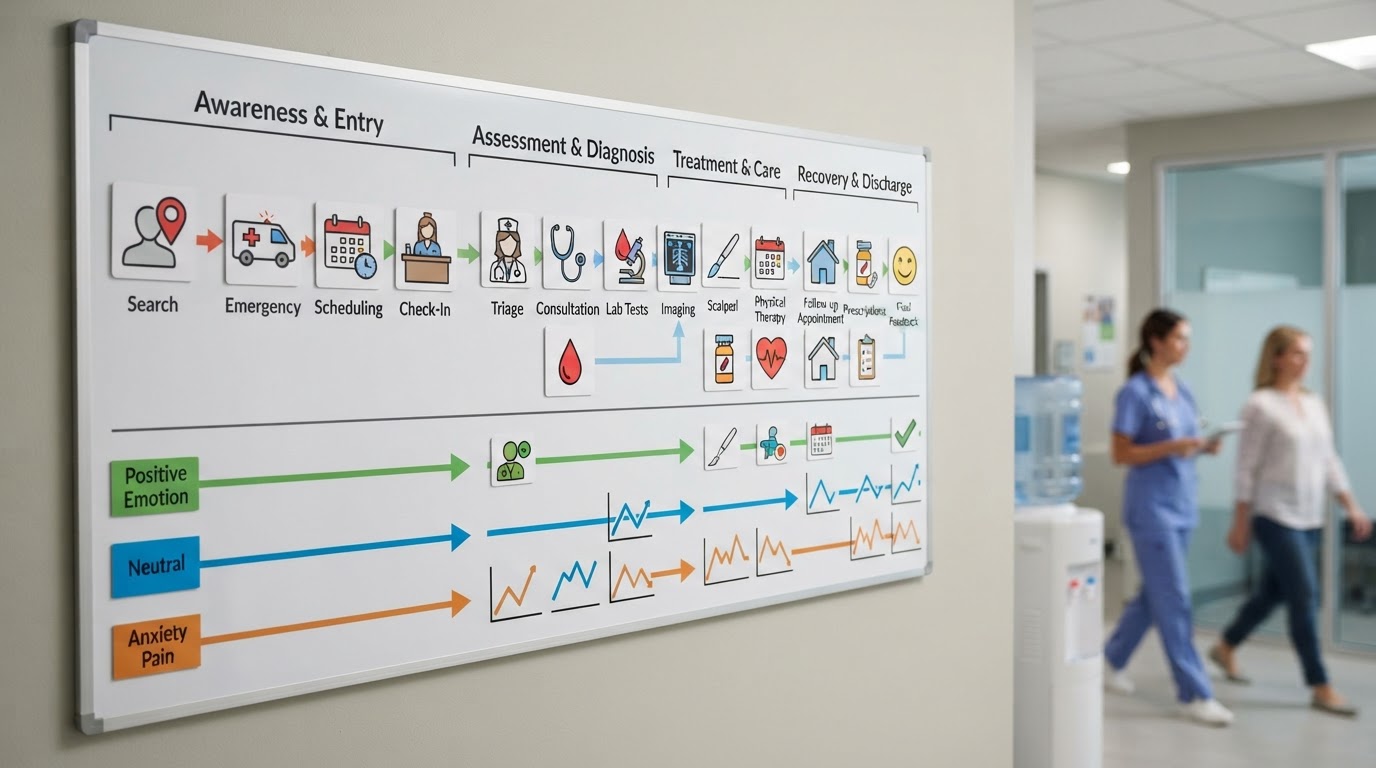
Key stages of the healthcare patient journey:
1. Awareness: The patient becomes aware of a health need—a symptom, a recommendation, or a life event. At this stage, patients search for information about their condition or need. Educational content—blog posts, videos, infographics—meets them here. See our content marketing and patient education guides.
2. Research: The patient researches their options—conditions, treatments, providers. They read reviews, visit websites, and compare practices. Your website, reviews, and content influence this stage. Comprehensive, trustworthy information wins research-stage patients. See our healthcare content writing guide.
3. Consideration: The patient narrows their options and considers specific providers. They evaluate credentials, location, reviews, and fit. Provider pages, testimonials, and clear service information support consideration. Trust signals are critical here. See our medical practice branding guide.
4. Decision: The patient decides to contact your practice. They call, submit a form, or book online. This is the conversion moment. Make it effortless—clear calls to action, online scheduling, click-to-call. Friction here loses patients. See our medical website conversion guide.
5. First Visit: The patient's first visit shapes their entire relationship with your practice. From the first phone call to the visit itself, every interaction matters. A positive first visit builds loyalty; a negative one loses the patient. See our patient retention guide.
6. Treatment and Follow-Up: The patient receives care and follow-up. Clear communication, education, and support during treatment build satisfaction and compliance. Post-visit follow-up shows you care. See our patient education materials guide.
7. Retention: The patient returns for future care. Recall systems, follow-ups, and engagement keep patients coming back. Retained patients provide recurring revenue and referrals. See our patient retention guide.
8. Advocacy: Satisfied patients refer others and leave reviews. Advocacy is the most powerful marketing—referred patients are pre-qualified and high-intent. Encourage and facilitate advocacy. See our patient reviews guide.
How to map and optimize the patient journey:
9. Document Each Stage: Map each stage of the journey from the patient's perspective. What are they thinking, feeling, and doing at each step? What questions do they have? What barriers exist? Documentation reveals the complete patient experience. Our medical marketing service facilitates journey mapping.
10. Identify Touchpoints: At each stage, identify the touchpoints where patients interact with your practice—search results, website, reviews, phone calls, visits, emails. Touchpoints are where you influence the journey. Optimize each touchpoint. See our healthcare branding consistency guide.
11. Identify Barriers: At each stage, identify barriers that prevent patients from advancing—confusing information, friction in scheduling, lack of trust signals. Barriers cause patients to drop off. Removing barriers improves conversion. See our medical website conversion guide.
12. Optimize Each Stage: For each stage, create the content, tools, and experiences that move patients forward. Educational content for awareness. Trust signals for consideration. Frictionless scheduling for decision. Recall systems for retention. Optimization at each stage compounds into higher conversion and loyalty. See our medical practice growth guide.
Patient journey mapping transforms marketing from a collection of tactics into a coherent strategy that meets patients at every step. Practices that understand and optimize the journey convert more visitors into loyal, referring patients. Explore our medical marketing services, browse our portfolio, or request a free consultation to map your patient journey.
Frequently Asked Questions
Explore our services
Learn how we help medical practices grow with Medical Marketing for Practices.