Medical Website Conversion: Turn Visitors Into Patients
A beautiful medical website that doesn't convert visitors into patients is a wasted investment. Many practices focus on driving traffic through SEO and ads but neglect what happens when patients actually arrive. Conversion optimization is the strategy of turning website visitors into booked appointments—measurably improving the return on every marketing dollar you spend. A website that converts at 2% versus 5% generates 150% more patients from the same traffic. The difference is not more traffic—it's better conversion. Our medical website design services build conversion-optimized healthcare sites.
Medical website conversion is unique because patients are making important, sometimes anxious decisions about their health. Trust, clarity, and ease of use matter more than flashy design. A patient who lands on your website should be able to understand what you do, trust that you are qualified, and book an appointment within minutes. Conversion optimization removes friction and guides patients toward that appointment. Google's web vitals (web.dev/vitals) provide performance standards that affect both ranking and conversion.
Key strategies for optimizing medical website conversion include:
1. Clear Value Proposition: Your homepage should immediately communicate who you are, what you do, and why patients should choose you. A clear headline, supporting subheadline, and prominent call to action above the fold tell visitors they are in the right place. Confused visitors leave—clarity converts. See our medical website design services.
2. Prominent Calls to Action: Every page should have a clear, prominent call to action—'Schedule a Consultation,' 'Book an Appointment,' 'Call Now.' Place calls to action above the fold, in the body, and at the end of each page. Use contrasting colors and action-oriented language. Make it effortless for an interested patient to act. Our consultation form integrates with conversion-focused CTAs.
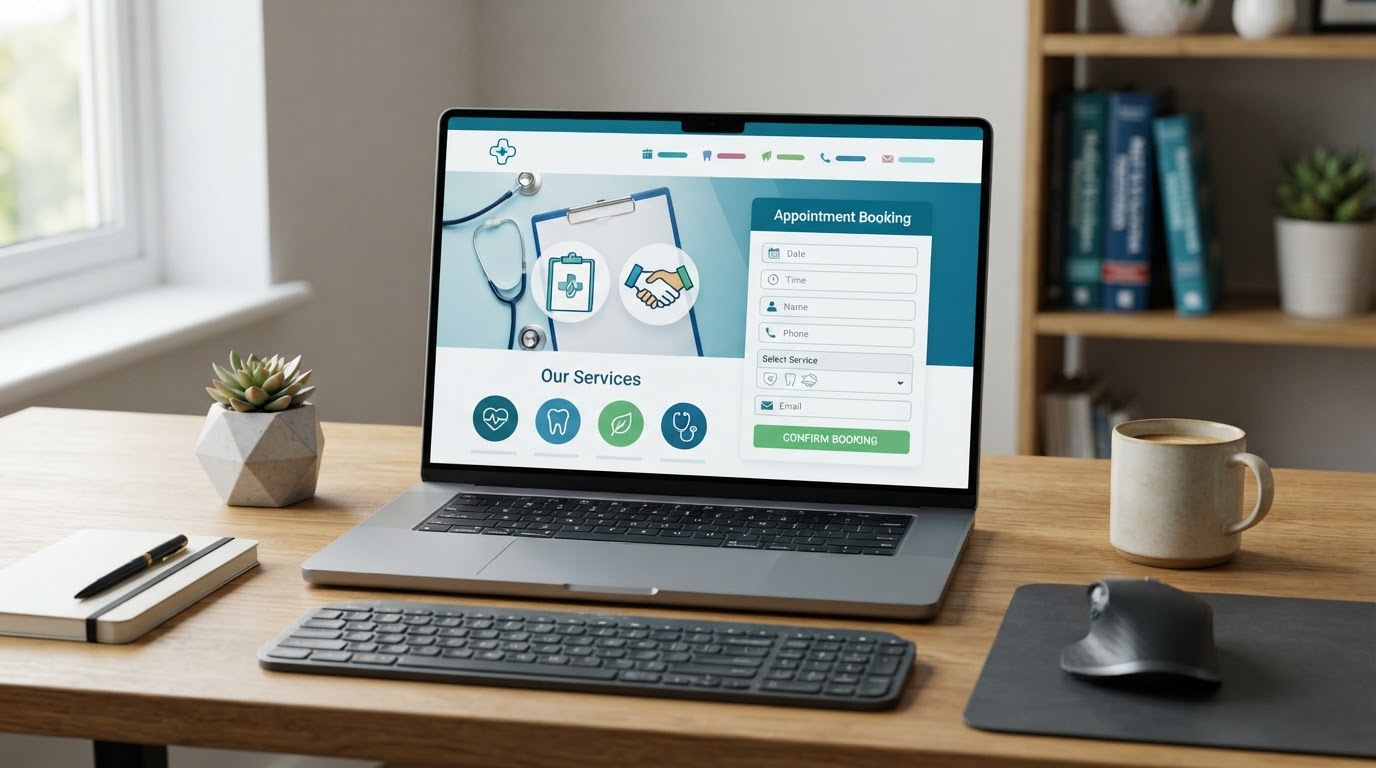
3. Online Scheduling: Offer online appointment scheduling. Many patients prefer to book online rather than call, especially after hours. Integrate scheduling with your practice management system. Practices with online scheduling convert significantly more website visitors into appointments. Our interactive medical forms service supports scheduling integration.
4. Click-to-Call Buttons: On mobile, click-to-call buttons let patients call your office with one tap. Phone calls are the primary conversion action for most medical practices. Make your phone number prominent and clickable on every page, especially on mobile. Google's mobile-friendly test (search.google.com/test/mobile-friendly) evaluates mobile usability.
5. Trust Signals: Build trust throughout your website. Display provider credentials, board certifications, hospital affiliations, professional memberships, and years of experience. Feature patient testimonials and reviews (with consent). Show before-and-after photos where appropriate. Trust signals reassure patients and increase conversion. Our reputation management service helps showcase trust signals.
6. Fast Page Load Speed: Page speed directly affects conversion. Studies show that even a one-second delay in page load time can significantly reduce conversions. Optimize images, minimize code, use a content delivery network, and choose fast hosting. Google's PageSpeed Insights (pagespeed.web.dev) measures and provides recommendations for your site speed.
7. Mobile Optimization: Most healthcare searches happen on mobile. Your site must be fully responsive, with readable text, tap-friendly buttons, and no horizontal scrolling. Mobile-first indexing means Google evaluates your mobile site primarily. A poor mobile experience costs you both rankings and conversions. Our medical website design services build mobile-optimized sites.
8. Clear Navigation: Patients should find what they need in seconds. Use clear, logical navigation with service pages, location pages, provider pages, and contact information easily accessible. Avoid complex menus that hide important pages. Confused navigation causes visitors to leave. Card-sorting and user testing reveal the most intuitive navigation structure.
9. Service-Specific Landing Pages: Each service should have a dedicated page with procedure information, benefits, recovery, and a clear call to action. Patients searching for specific procedures should land on relevant pages, not a generic homepage. Service-specific pages convert better than generic ones. See our medical website design services.
10. Social Proof: Feature patient testimonials, reviews, and case studies (with consent). Social proof is one of the most powerful conversion tools—patients trust other patients more than marketing copy. A testimonial section on your homepage and service pages builds trust and increases conversion. Our reputation management service collects and showcases testimonials.
11. Reduce Form Friction: Your appointment request form should be as short as possible while collecting necessary information. Each additional field reduces conversion. Use smart forms that adapt based on patient type. Ensure forms are mobile-friendly with appropriate input types. Our interactive medical forms service designs conversion-optimized forms.
12. Track and Test: Use Google Analytics and conversion tracking to measure how visitors move through your site and where they drop off. A/B test headlines, calls to action, form lengths, and page layouts. Continuous testing and optimization compound over time—small improvements add up to significant conversion gains. Data-driven optimization outperforms guesswork.
Medical website conversion optimization turns your website from a digital brochure into a patient acquisition engine. Practices that optimize conversion get more patients from the same traffic—improving the return on every marketing dollar. Explore our medical website design services, browse our portfolio, or request a free consultation to improve your website's conversion.
Frequently Asked Questions
Explore our services
Learn how we help medical practices grow with Medical Website Design.