Orthopedic Brochure Design: A Guide for Practices
Orthopedic brochures are essential marketing and patient education tools. Patients facing joint replacement, sports medicine procedures, or spine surgery want to understand their condition, the procedure, recovery, and expected outcomes before committing to surgery. A well-designed orthopedic brochure addresses these needs—educating patients, building trust in your expertise, and driving consultation requests. The American Academy of Orthopaedic Surgeons (aaos.org) emphasizes patient education as a component of quality orthopedic care.
Orthopedic patients represent significant lifetime value, making the investment in professional brochure design highly worthwhile. A brochure that helps a patient understand and choose a knee replacement generates substantial revenue. Our medical brochure design services specialize in orthopedic collateral, and our orthopedic surgery brochure portfolio showcases our work.
Key elements of effective orthopedic brochure design include:
1. Procedure-Specific Content: Rather than a generic orthopedic overview, create dedicated brochures for each procedure—knee replacement, hip replacement, shoulder surgery, arthroscopy, spine surgery, sports medicine. Each brochure walks the patient through the condition, procedure, recovery, and expected outcome. Procedure-specific brochures convert better than generic ones. See our medical brochure design services.
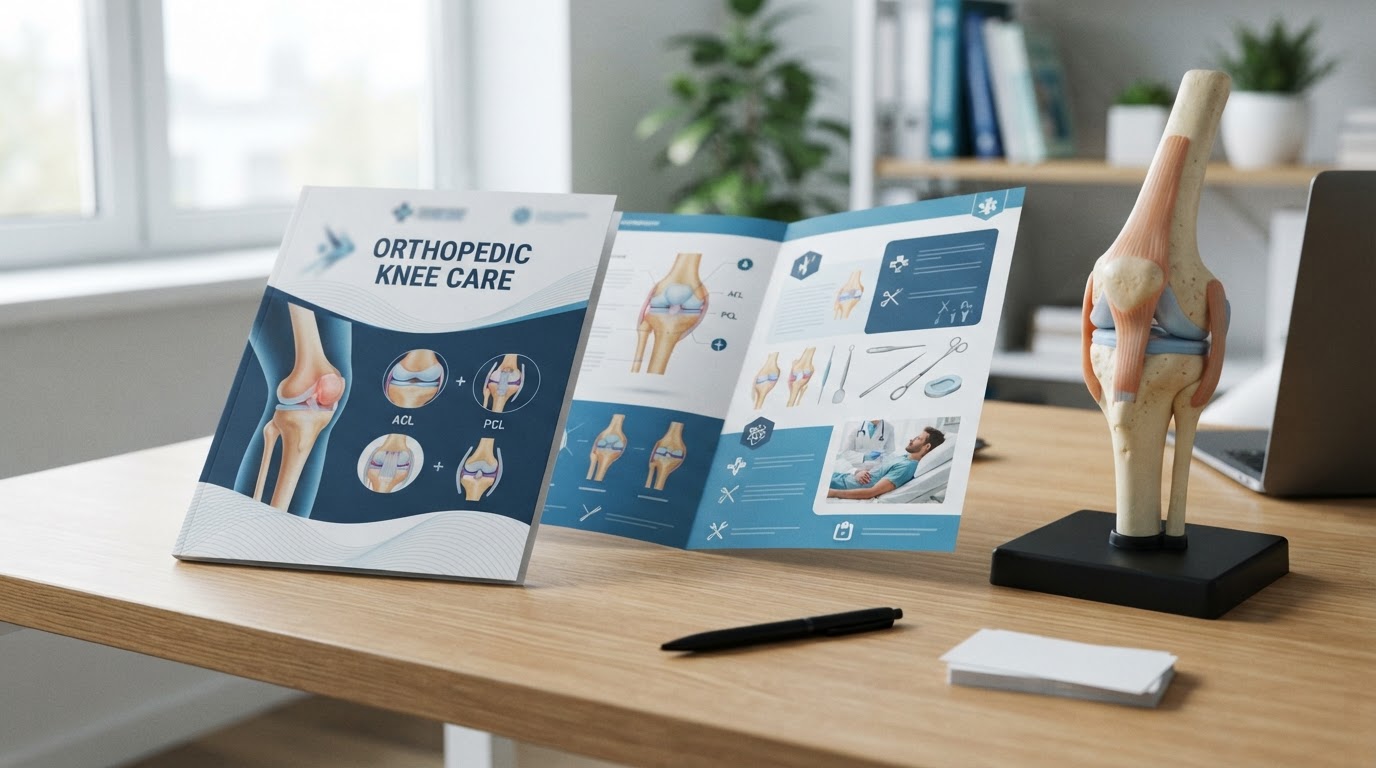
2. Anatomical Illustrations: Custom anatomical illustrations help patients understand their condition and the procedure. A diagram of a knee joint showing arthritis damage, or a hip replacement showing the implant components, communicates far more than text alone. Professional medical illustrations build trust and aid comprehension. Our medical graphic design services create custom anatomical illustrations.
3. Recovery Timeline Graphics: Patients want to know how long recovery takes. A visual timeline showing hospital stay, initial recovery, physical therapy milestones, and return to activity sets realistic expectations and reduces anxiety. For major procedures like joint replacement, this timeline is especially valuable. The American Academy of Orthopaedic Surgeons (orthoinfo.aaos.org) provides recovery information.
4. Provider Credentials: Highlight your surgeons' education, board certifications, fellowships, hospital affiliations, and experience. The American Board of Orthopaedic Surgery (abos.org) certification is a credential patients look for. Patients choose surgeons they trust—credentials build that trust. Include surgeon photos and brief bios.
5. Patient Testimonials: With proper consent, include short patient testimonials describing their experience and outcome. Real patient stories resonate more than marketing copy. A patient who returned to golf after knee replacement is powerful social proof. Our reputation management service helps collect patient stories.
6. Clear Call to Action: Every orthopedic brochure should end with a clear next step—schedule a consultation, request an evaluation, or seek a second opinion. Include your phone number, website URL, and a QR code linking to your appointment page. Make it effortless for an interested patient to act.
7. Investment and Insurance Information: Orthopedic surgery involves significant investment. Clearly presenting insurance coverage, financing options, and what to expect financially removes a barrier to scheduling. Transparency about costs builds trust and pre-qualifies patients before the consultation.
8. Brand Consistency: Your brochure should match your website, business cards, signage, and social media. Consistent branding across every touchpoint reinforces professionalism and memorability. Our graphic design for medical practices services ensure brand consistency across all collateral.
9. Professional Photography: Use professional photos of your facility, surgical team, and technology. Authentic images of your actual practice build trust. Avoid generic stock photos that look like every other orthopedic practice. Show your operating rooms, therapy areas, and advanced technology.
10. Quality Printing: Premium paper stock, professional finishes, and color-accurate printing reflect the quality of your practice. A flimsy, poorly printed brochure suggests a practice that cuts corners. Our printing for medical practices service produces premium orthopedic collateral.
11. QR Codes and Digital Integration: Include QR codes linking to your website, online scheduling, procedure videos, or patient education content. Bridge print and digital marketing. Patients who scan a QR code from your brochure can book an appointment immediately. Our medical explainer videos service creates linked video content.
12. Multi-Use Design: Design brochures that work in multiple contexts—waiting room displays, referral packets, direct mail, and community events. A versatile brochure maximizes your investment. Consider different formats (tri-fold, bi-fold, multi-page) for different uses. See our medical brochure design services.
Orthopedic brochures are an investment that pays dividends through educated patients, higher consultation conversion rates, and increased procedure acceptance. A well-designed brochure works for your practice 24/7, in waiting rooms, referral packets, and community events. Explore our medical brochure design services and orthopedic surgery portfolio, or request a free consultation to discuss your practice's brochure needs.
Frequently Asked Questions
Explore our services
Learn how we help medical practices grow with Medical Brochure Design.