Medical Brochure Design: Best Practices for Patient Education and Conversion
A well-designed medical brochure is one of the most versatile marketing assets a practice can own. It works in the waiting room, at health fairs, in referral packets, and as a direct-mail piece. Unlike a website, a brochure is tactile—patients hold it, share it with family members, and take it home.
The best medical brochures balance education with persuasion. They inform patients about conditions and treatments while subtly guiding them toward scheduling a consultation.
Key design principles for effective medical brochures:
1. Hierarchy and Readability: Patients scan, they do not read. Use clear headings, short paragraphs, and bullet points. Body text should be at least 10pt, and headings should create a visual path from the cover to the call to action.
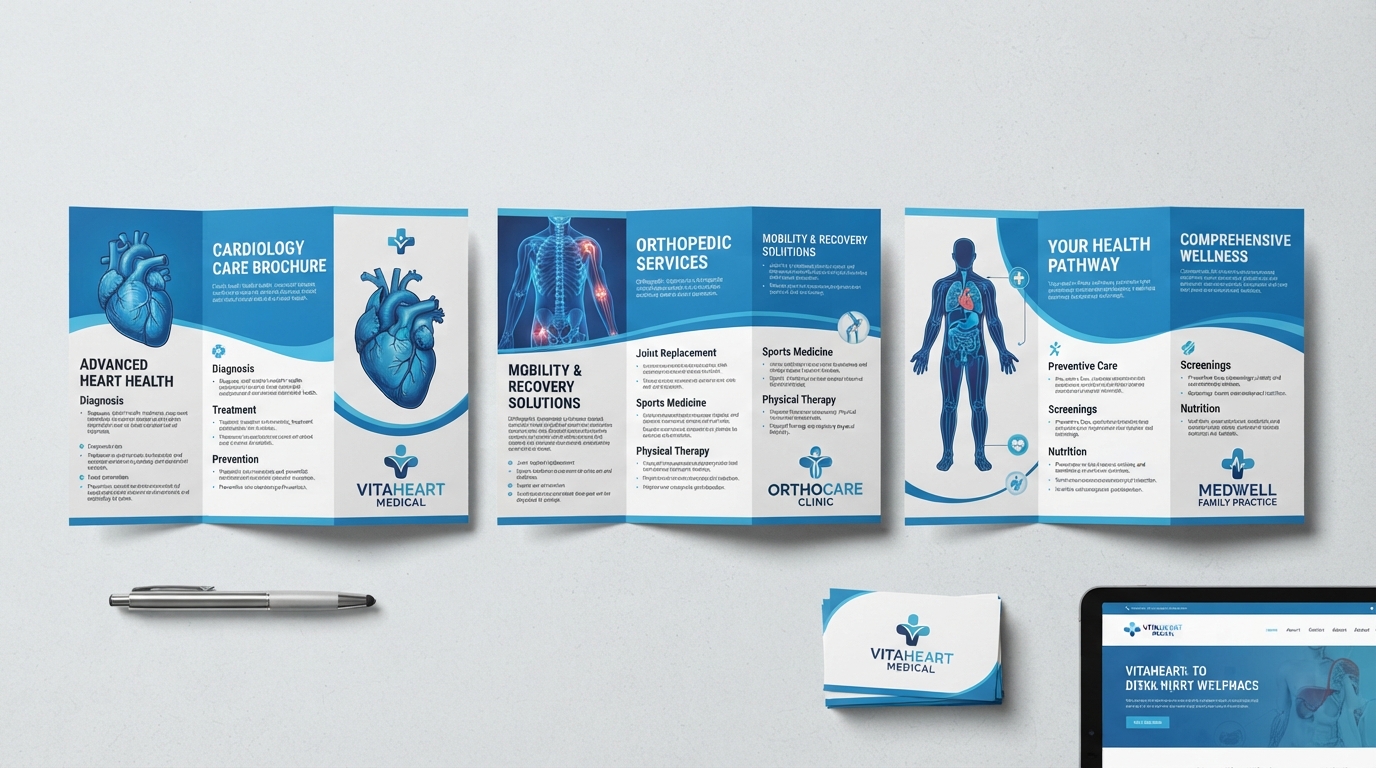
2. Anatomical Illustrations and Visuals: Custom anatomical diagrams help patients understand procedures in a way that text alone cannot. Avoid generic stock images of smiling doctors—use real provider photos and condition-specific visuals instead.
3. Trust Signals: Board certifications, hospital affiliations, years of experience, and patient testimonials should be prominently featured. The American Board of Medical Specialties (abms.org) is the authoritative source patients use to verify credentials.
4. Clear Service Breakdown: Group services logically—diagnostic, non-surgical, and surgical—so patients can quickly find what applies to them. Include brief descriptions in plain language, not medical jargon.
5. Insurance and Payment Information: Transparency about accepted insurance plans and payment options reduces phone-call volume and pre-qualifies patients before they book.
6. Strong Call to Action: Every brochure should end with a clear next step: a phone number, website URL, QR code, or appointment request prompt. Make it easy for the patient to act.
7. Brand Consistency: Your brochure should match your website, business cards, signage, and social media. Consistent branding across all touchpoints reinforces professionalism and memorability.
Whether you need a tri-fold practice overview, a multi-page procedure booklet, or a referral folder for physician outreach, professional design makes the difference between a brochure that gets read and one that gets discarded. See our medical brochure design services and browse our brochure portfolio for examples of our work.
Explore our services
Learn how we help medical practices grow with Medical Brochure Design.