Medical Business Card Design: Make a Lasting Impression
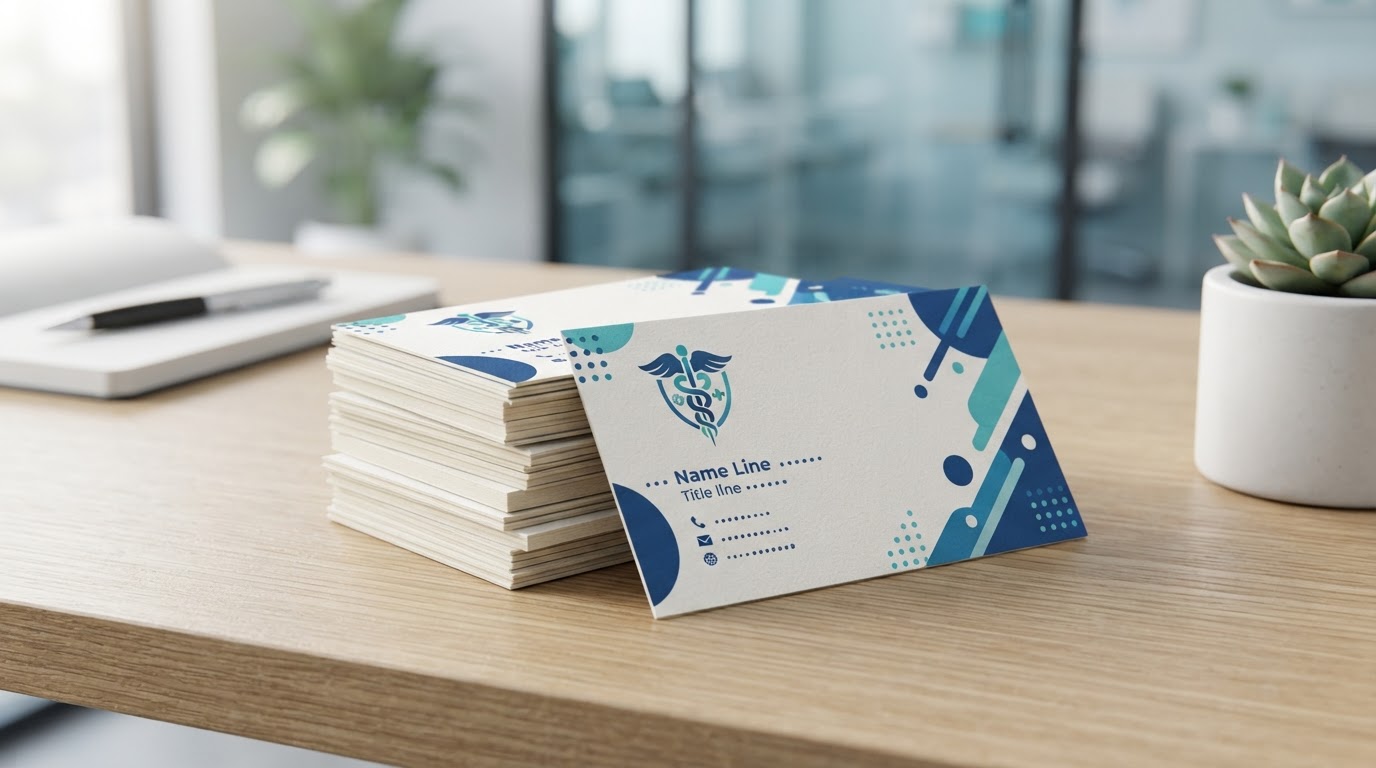
Your business card is often the first tangible impression a patient or referring provider has of your practice. Exchanged at conferences, community events, and referral visits, your business card represents your practice long after the conversation ends. A premium, well-designed business card creates a professional impression and provides essential contact information. A cheap, generic card undermines credibility. Our printing for medical practices service produces premium healthcare business cards.
Despite digital contact sharing, business cards remain essential in professional healthcare settings. They are exchanged at conferences, handed to referring providers, and given to patients. A business card is a physical reminder of your practice that can be kept, shared, and referenced. Quality matters—your card reflects your practice quality. Our graphic design for medical practices services include business card design.
Key principles of effective medical business card design include:
1. Essential Information: Include your name, credentials, practice name, specialty, phone number, email, website, and physical address. Don't overcrowd the card—include only essential information. A clean card with key information is more professional and memorable than a cluttered one. Consider what information patients and referring providers actually need.
2. Brand Consistency: Your business card should match your website, brochures, signage, and social media. Use your logo, brand colors, and typography. Consistent branding across every touchpoint reinforces professionalism and memorability. A business card that doesn't match your other materials creates dissonance. See our medical practice branding guide.
3. Premium Paper Stock: Paper quality dramatically affects perceived value. Use 16pt or 32pt stock—substantial enough to feel premium. Flimsy cards suggest a practice that cuts corners. The tactile experience of a premium card creates a lasting impression. Our printing for medical practices service offers premium paper stocks.
4. Professional Finishes: Choose finishes that match your practice personality. Matte coating conveys sophistication; gloss makes colors pop. Soft-touch creates a velvety feel that signals luxury. Spot UV highlights specific design elements like your logo. Foil stamping adds metallic accents. Choose finishes strategically, not just for novelty.
5. Clean, Readable Design: Use readable fonts and sufficient white space. Avoid tiny text that's hard to read. Ensure sufficient contrast between text and background. A clean, readable card is more professional than a cluttered, hard-to-read one. Less is more in business card design.
6. Two-Sided Design: Use both sides of the card. Front: logo, name, credentials, and practice name. Back: contact details, services, or a QR code linking to your website or online scheduling. Two-sided design allows more information without crowding. A QR code on the back bridges print and digital.
7. QR Code Integration: Include a QR code linking to your website, online scheduling, or digital contact card. QR codes bridge print and digital, letting recipients scan to learn more or book an appointment. Ensure the QR code is large enough to scan reliably. Our medical website design services support QR integration.
8. Specialty and Credentials: Prominently display your specialty and credentials (MD, DO, DDS, etc.). Patients and referring providers want to know your specialty and qualifications. Credentials build trust and ensure your card is filed correctly. The American Board of Medical Specialties (abms.org) maintains board certification information.
9. Professional Photography: Some practices include a professional headshot on business cards, especially for individual practitioners. If you include a photo, ensure it's professional, current, and consistent with your website and other materials. A poor photo undermines the professional impression.
10. Avoid Common Mistakes: Don't use tiny fonts, overcrowd the card, use low-resolution logos, choose unreadable color combinations, or include unnecessary information. Don't use generic templates that look like every other card. A custom-designed card reflects your unique practice. Our graphic design services create custom business cards.
11. Consistent Across Providers: For multi-provider practices, ensure all business cards share consistent design—same layout, colors, and branding—with individual provider information varying. Consistency across providers reinforces your practice brand. A template ensures consistency while allowing individual customization.
12. Quality Printing: Even the best design fails with poor printing. Use a printer that delivers color-accurate, crisp, professional results. Request proofs before large runs. Our printing for medical practices service delivers premium, color-accurate business cards that match your brand specifications.
Your business card is a small but powerful marketing tool. A premium, well-designed card creates a lasting professional impression and provides essential contact information. Explore our printing for medical practices and graphic design services, browse our portfolio, or request a free consultation to design business cards for your practice.
Frequently Asked Questions
Explore our services
Learn how we help medical practices grow with Graphic Design for Medical Practices.