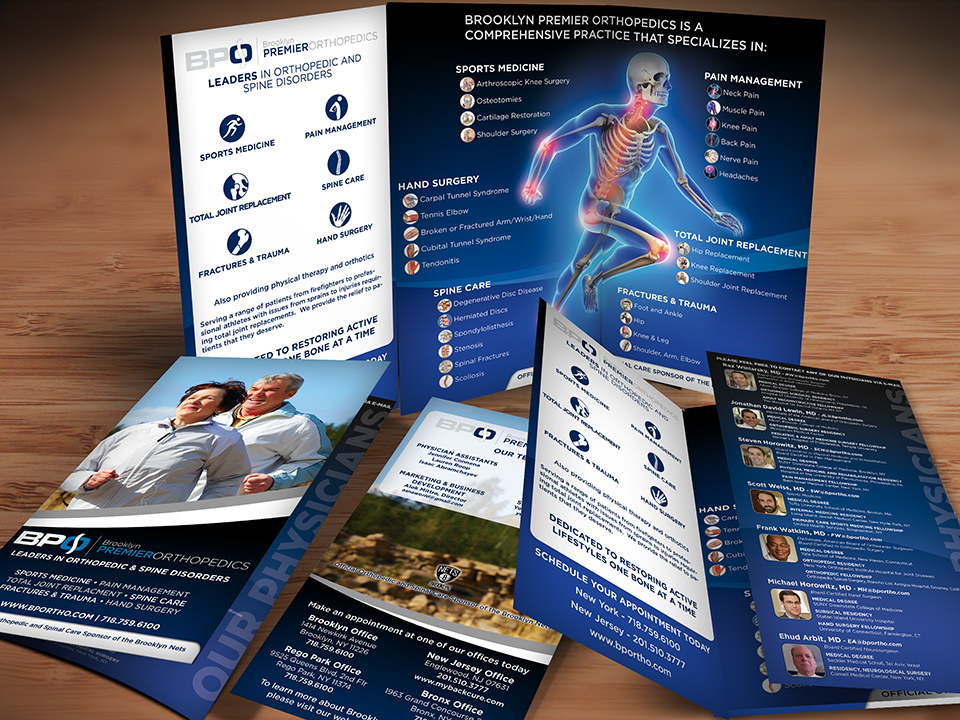
Pain Management Brochure Design That Builds Trust and Drives Referrals
A pain management brochure must explain interventional procedures in reassuring language while establishing clinical authority. Here's exactly what to include, the features that matter, and what makes a pain management brochure effective at converting anxious patients into consultations.
What Should a Pain Management Brochure Include?
The essential content sections every effective pain management brochure must include to educate patients and drive consultations.
Practice Identity & Branding
Open with a clean, confident brand system — your practice logo, name, and tagline in consistent colors and typography. Pain patients are often anxious and seeking relief, so a calm, professional visual identity signals competence and compassion before they read a word. Include your main phone number and website prominently so patients can reach out immediately.
Conditions Treated
List the chronic and acute pain conditions you manage: back and neck pain, sciatica, joint pain, neuropathy, complex regional pain syndrome (CRPS), cancer pain, post-surgical pain, and headache disorders. Group conditions by type or body region with simple icons so patients can quickly identify whether your practice treats their specific pain.
Treatment Options & Procedures
Outline the full spectrum of pain therapies — from conservative care (medication management, physical therapy) to interventional procedures (epidural steroid injections, nerve blocks, radiofrequency ablation, spinal cord stimulation) and regenerative options (PRP). Patients want to see a graduated approach, reassuring them that surgery isn't the only path to relief.
Pain Education & Anatomy
Include clear anatomical diagrams showing the spine, nerve pathways, and joints relevant to common pain conditions. Visual education helps patients understand why they hurt and how your treatments target the source — building confidence in your clinical approach rather than just masking symptoms.
Physician Bios & Credentials
Feature professional headshots and concise bios for each pain management physician, highlighting board certification in pain medicine, fellowship training, anesthesiology or physiatry background, and years of experience. Pain patients scrutinize credentials heavily, so make board certifications and hospital affiliations prominent.
What to Expect at Your Visit
Reduce patient anxiety by describing the consultation process — what happens at the first appointment, typical diagnostic steps, treatment planning, and follow-up. Pain patients often feel unheard; a clear description of your patient-centered process builds trust before they ever walk in.
Office Locations, Hours & Contact
Close with full practice details: all office locations with addresses, phone numbers, fax, appointment hours, accepted insurance plans, and a clear call to action to schedule a consultation. Include your website and patient portal link so patients can book or complete intake forms online.
Features to Include in Your Brochure
Design and functional features that elevate a pain management brochure from ordinary to exceptional.
Tri-Fold or Multi-Page Booklet Format
Choose a tri-fold (6-panel) layout for a concise practice overview, or a 12–16 page booklet when covering many interventional procedures and conditions. Match the format to your content volume and distribution — waiting room rack, referral packet, or referring-physician outreach.
Procedure Illustration System
A consistent set of anatomical illustrations showing injection sites, nerve pathways, and treatment areas lets patients visualize how each procedure works. This visual education reduces fear of the unknown and increases procedure acceptance rates.
Conservative-to-Interventional Callouts
Use visual contrast — color-coded badges or stepped columns — to show the progression from conservative care to interventional procedures. This reassures patients that you start with the least invasive effective option and builds trust in your clinical judgment.
Premium Paper Stock & Finish
Pain patients associate print quality with care quality. Use heavyweight matte or soft-touch stock with spot UV or aqueous coating on key elements. The tactile experience of a premium brochure reinforces the perception of a premium, specialized practice.
Bilingual Layout Option
For practices serving diverse communities, a bilingual (English/Spanish) layout doubles your reach. We design bilingual brochures with balanced column structures so neither language reads as secondary.
QR Codes to Online Booking
Place trackable QR codes linking directly to your appointment request form or patient portal. This bridges print to digital and lets you measure which brochure distribution channels drive the most consultations.
What Makes an Effective Pain Management Brochure?
Strategic principles that turn a well-designed brochure into a patient-acquisition tool.
Empathetic, Plain Language
An effective pain management brochure replaces clinical jargon with empathetic, plain language. Instead of 'transforaminal epidural steroid injection,' write 'a targeted injection that delivers anti-inflammatory medication directly to the nerve causing your pain.' Patients who understand their treatment are more likely to schedule it and follow through.
Clear Visual Hierarchy
Guide the reader's eye from headline to conditions to treatments to contact. Use size, color, and spacing to create a scannable flow. Patients should be able to find their pain condition, understand the treatment options, and locate your phone number in under 30 seconds.
Conversion-Focused Call to Action
Every effective brochure ends with a single, prominent call to action: schedule a consultation. Place your phone number and booking link in at least two locations (front panel and back panel), and remove competing CTAs that dilute the decision.
Trust Signals Throughout
Weave credibility markers across the brochure — board certifications, hospital affiliations, years in practice, patient testimonials, and outcome statistics. Trust is built cumulatively, not crammed onto one panel.
Imagery That Reduces Anxiety
Avoid graphic photos of needles or procedures that alarm patients. Instead use clean anatomical illustrations, active lifestyle photography (patients walking, gardening, returning to activity), and friendly provider headshots. The goal is to show the relief patients want, not the procedure they fear.
Strategic Distribution Plan
An effective brochure is only effective if it reaches patients. Plan distribution across waiting room displays, referral packets to primary care physicians and orthopedic surgeons, pre-procedure consultation folders, and community health events. Match quantity to each channel and reorder before you run out.
Relevant Portfolio Examples
Real pain management brochure projects we've designed for practices.
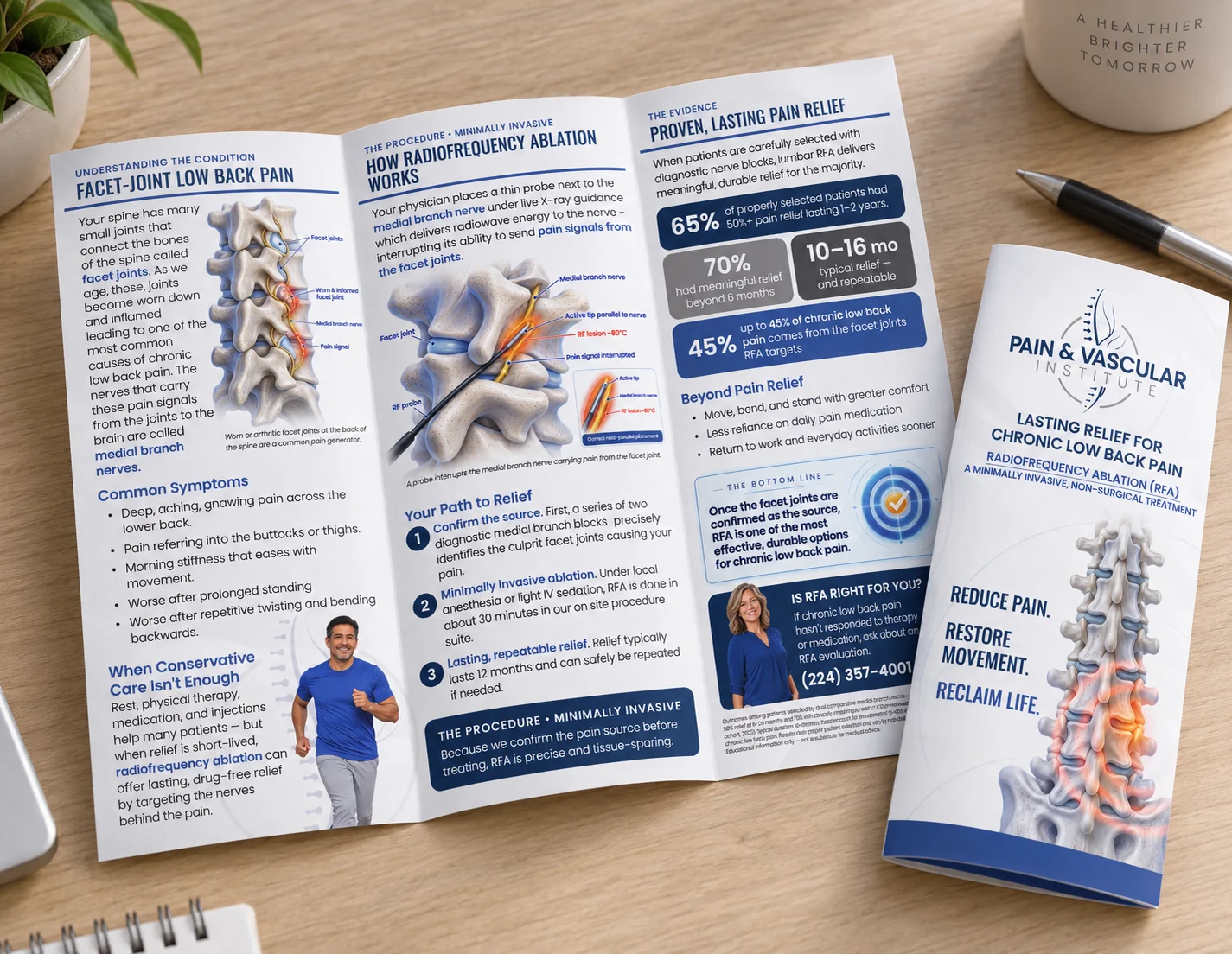
Radiofrequency Ablation (RFA) Brochure Design
Custom tri-fold medical brochure for Pain & Vascular Institute educating patients on Radiofrequency Ablation (RFA) for facet-joint chronic low back pain, featuring detailed 3D anatomical spine illustrations, procedural breakdown, and clinical outcome statistics.
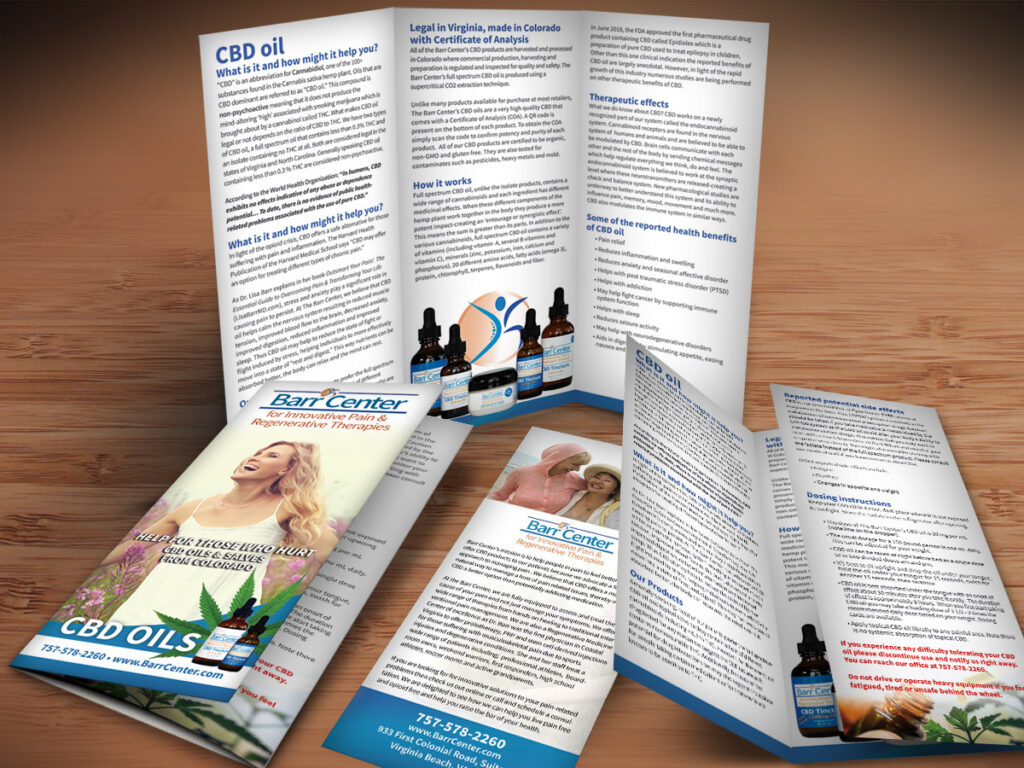
CBD Pain Management Brochure
Educational brochure explaining medical grade CBD usage in pain management clinical practices.
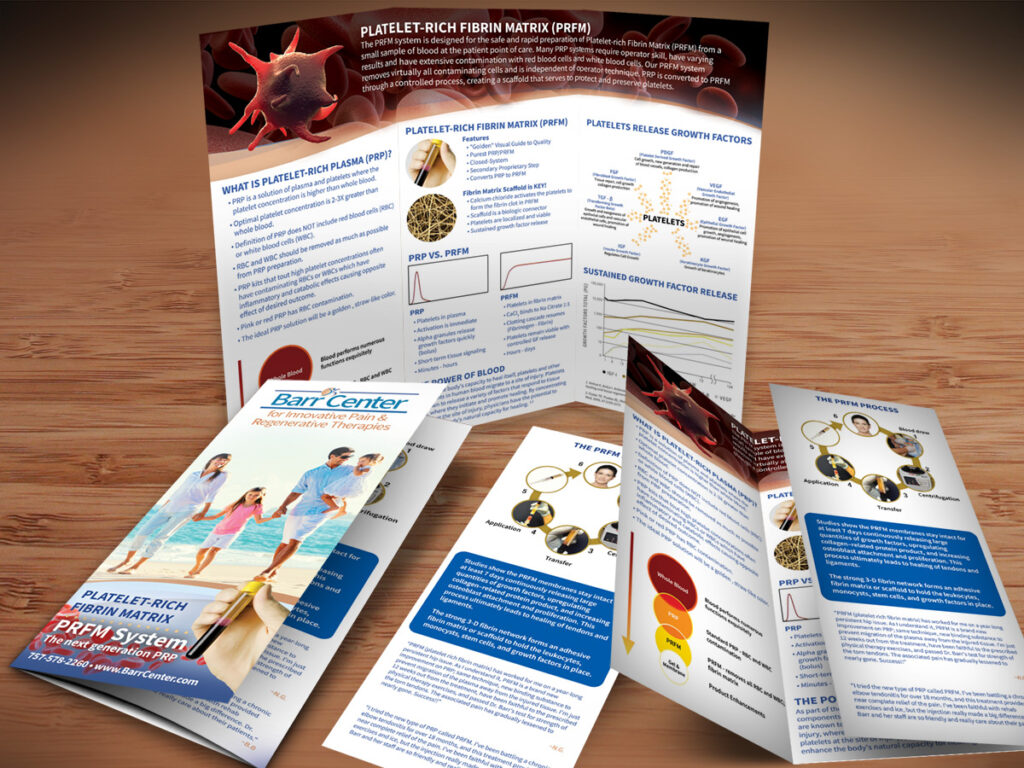
Barr Center PRFM Brochure
Premium print brochure detailing Platelet-Rich Fibrin Matrix (PRFM) treatment protocols for chronic joint and tendon pain.
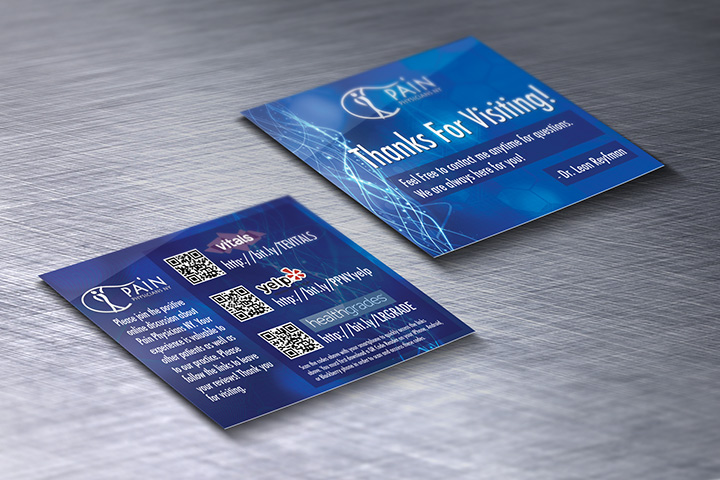
Pain Management Rate Card
Rate card design for Pain Physicians NY, a pain management practice. These useful cards are given to satisfied patients to drive them to leave positive reviews online of their experience at the practice.
How Medical Brochure Projects Are Quoted & Scoped
Every medical practice has distinct patient volumes, procedural complexities, and clinical goals. We provide transparent, custom quotes based on six straightforward project factors, with no hidden fees.
Copywriting & Clinical Content
Whether your doctors supply finalized copy, rough procedure notes, or need our healthcare creative team to draft patient-friendly educational text from scratch.
Format & Folded Dimensions
Standard 6-panel tri-fold (8.5x11 flat, folding to 3.66x8.5), 8-panel double gate/parallel fold, or multi-page saddle-stitched booklets (8 to 16 pages) for surgical centers.
Anatomical Diagrams & Custom Art
Medical-grade 3D anatomical illustrations, mechanism of action graphics, custom procedure flowcharts, or curated photography from our verified medical image registry.
Paper Stock & Tactile Finish
100lb gloss/matte text, sturdy 100lb cover cardstock, soft-touch velvet lamination, spot UV gloss over anatomical graphics, or aqueous protective coatings.
Print Quantity & Volume Tiers
Small runs (250 or 500 copies) for boutique practices or pilot tests, up to high-volume production (1,000, 2,500, or 5,000+ copies) for maximum cost efficiency per unit.
Proofing, Turnaround & Delivery
Digital PDF and press-accurate proofs, standard 5–7 business day production, rush delivery options, and nationwide ground or expedited shipping directly to your office.
Requesting a 250 vs. 1,000 Copy Comparison
Because press setup is a fixed cost, printing 1,000 copies typically costs only marginally more than 250 copies, significantly lowering your cost-per-brochure. When submitting your quote request, simply note that you would like a two-tier comparison and we will provide exact numbers for both quantities.
Frequently Asked Questions
Common questions about pain management brochure design.
Ready to Design Your Brochure?
Talk with our healthcare creative team about your pain management brochure project. Call 888-803-2021 or request a free consultation online.
Explore all brochure design services